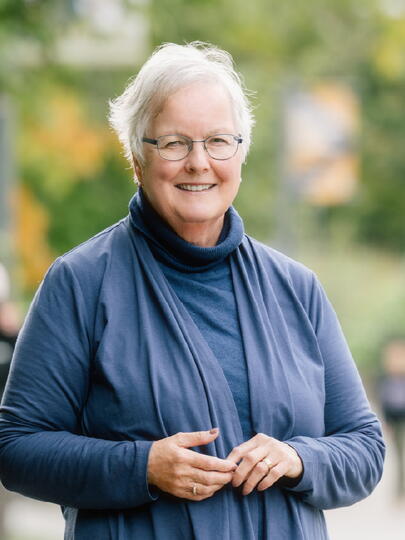



















Why a UBC prof illuminates how toxic leadership impacts workplaces

Dr. Lingtao Yu is an Associate Professor in the Organizational Behaviour and Human Resources Division at the UBC Sauder School of Business, and he spends much of his time studying what he describes as the “dark side” of leadership: unethical behaviours, emotional fallout, and abusive workplace dynamics. His research asks tough but necessary questions such as: why do some leaders mistreat their employees? What toll does that take on individuals and organizations? And more recently, how do managers perceive or evaluate an employees’ use of artificial intelligence (AI)?
Examining the “dark side” of leadership may seem like a bleak endeavour. However, as a thought leader at The Montalbano Centre for Responsible Leadership Development, Dr. Yu is examining these grim topics to come up with effective and sustainable solutions to build healthier workplaces. “If we can identify evidence-based management practices to recommend, then over time organizations can build healthier, more responsible leadership cultures,” says Dr. Yu.
In this Q&A, Dr. Yu shared his insights on effective leadership, why we need more scientific evidence before promoting AI in the workplace, and what employees and leaders can do to reduce unethical behaviour at work. Dr. Yu kicked off the conversation by sharing his journey from being an academic in China to becoming a scholar at UBC Sauder.
Dr. Lingtao Yu (LY): My academic path has been quite straightforward. I earned a double bachelor’s degree in social psychology and business law in China. In 2008, I moved to the US to pursue a master’s in industrial-organizational psychology at University of Massachusetts in Boston. During that time, I also had a stint at the consulting firm McKinsey.
In 2011, I returned to academia to begin my PhD in Business Administration with a focus on Organizational Behaviour and Human Resources (OBHR) at the University of Minnesota. I spent six years there, and after completing my PhD, I joined UBC Sauder in 2017.

Are you reading anything particularly interesting in academic literature right now?
LY: There's one paper I recently read that stood out to me. It's about how co-workers perceive others’ use of AI in the workplace, and how that triggers different responses. The main finding is that when a competent, high-performing person uses AI, it triggers admiration from peers and leads to more positive interactions and better performance. But when someone perceived as low-performing uses AI to try to gain an advantage, it can trigger contempt, which leads to more social undermining and less helping behaviour.
I found it really interesting because we always hear that AI is good, and companies are pushing it hard. But this study shows using AI at the workplace can alter our perception and reputation amongst our co-workers. It also sends a clear message to practitioners about how to use AI wisely and avoid negative side effects in the workplace.
Do the lessons from this paper relate to your own research in any way?
LY: The study I mentioned looks at interactions between co-workers; so it's on a more peer-to-peer level. My research, on the other hand, focuses more on the leadership context.
Right now, I’m looking at the usage of AI in the leadership domain. For example, how do managers perceive or evaluate employees’ use of AI? And vice versa: when employees observe their supervisors using AI for their managerial tasks, how do they respond? Do they appreciate it, or do they prefer something else?
There’s a strong voice out there saying, “We’re human, not service robots.” Especially for leaders, people expect independent thinking, emotions, and personal judgment. So I’m interested in these kinds of questions and it’s an area I want to explore more in the next couple of years.
Why is the topic of AI's influence on leadership and workplace dynamics so important to you?
LY: I consider it a kind of grand challenge. These days, if you look at social media or popular self-help books or posts, the dominant message is: AI is good, it’s the era of AI, and organizations should promote it. But there’s just not enough scientific research. We need more evidence-based management practices. Without scientific evidence, I think it’s dangerous to blindly promote AI use in the workplace.
We need more research to really understand what’s happening, especially in how AI affects interpersonal interactions at work. Unless we know enough, we can’t give specific guidance or create effective policies for organizations.
Is there a book that's had an outsized impact on your own areas of interest and research?
LY: There’s one book I keep coming back to: Give and Take by Adam Grant. The book’s theme is about pro-social behaviour in the workplace, which I find relevant to responsible leadership.
Responsible leadership isn’t just about corporate social responsibility to stakeholders, employees, or customers. It’s also about responsibility to society and the country. The book’s central idea—how much we take versus how much we give back—really speaks to this broader sense of responsibility.
I think the broader UBC Sauder alumni network can take many lessons from this book. Employees or supervisors who are juggling multiple tasks and have so much on their plates tend to ask: do we actually have resources to give back? And should we?
That book encourages us not to just think about taking benefits, but also how to give back—to your company, your team, and society. Giving back not only supports the organization’s goals but also benefits our own psychological well-being and mental health.
Your own research at the Montalbano Centre is aimed at fostering better leadership and harmony in the workplace. Can you shed light on what broad questions you're trying to address at the Centre?
LY: I consider myself a micro-organizational behaviour scholar, focusing on individual-level phenomena within organizations. More specifically, I study what I call the “dark side” of organizational behaviour, which may seem opposite to responsible leadership.
I’m especially interested in ethical leadership—and more precisely, abusive leadership, which has been a hot topic for the last 20 years.
Abusive leadership refers to supervisors displaying hostile verbal and nonverbal behaviours. This includes things like ridiculing employees, giving harsh negative comments, invading privacy, taking credit for others’ work, or blaming employees unfairly.
I focus on three big questions. First, why should we care about abusive leadership? Studies show this behaviour costs organizations millions of dollars every year. One study estimated nearly US$25 million, and that study is several years old, so it’s probably underestimated.
Second, why are supervisors abusive? Many people assume it’s because the supervisor is just a “jerk” or has personality issues. But I ask my MBA students to look deeper: even the most abusive bosses tend to target only certain employees, not everyone. So it’s not just about the leader, it might also involve something about the employees, or the team culture, reward systems, or organizational culture.
Third, and this is the practical and arguably the most important question: what can organizations do to stop abusive leadership?
Finally, on a more positive note, I research mindfulness. I practice mindfulness meditation myself and see benefits personally. But there’s surprisingly little scientific research on how mindfulness works in organizations—how employees experience it and whether it improves performance. Many companies, especially in Silicon Valley, encourage mindfulness at work, but evidence is limited. I want to explore that gap.
Looking back at all the work you do at the Montalbano Centre, how does your research help foster responsible leadership among students and alumni?
LY: That’s a question I’ve been thinking about a lot, especially since our Dean Darren Dahl appointed me as an academic associate at the Montalbano Centre. The Centre’s focus is responsible leadership, but if you look at my research, I study the dark side of leadership such as abusive leadership and unethical behaviours.
It’s interesting to think about how my research fits with the Centre’s mission. Even though my work focuses on the dark side, the reason I do this research is because these problems are common and, in some ways, becoming more prevalent. You see discussions about abusive bosses on platforms like Facebook and Reddit—people talking about how employees cope and how organizations respond. There’s a real need from practitioners to understand this.
More importantly, my goal is to find what can be done. Is there anything supervisors, employees, or companies can do to reduce abusive leadership? If we can identify evidence-based management practices to recommend, then over time organizations can build healthier, more responsible leadership cultures.
So, I see my work contributing by shining a light on the dark side, showing how harmful it is, and identifying ways to transform it into more positive, responsible leadership. That’s how I believe my research supports the Centre’s mission.


