
















Understanding concussion: What parents and young athletes need to know
UBC sports injury expert (and hockey mom) Dr. Shelina Babul tackles common myths about this brain injury.
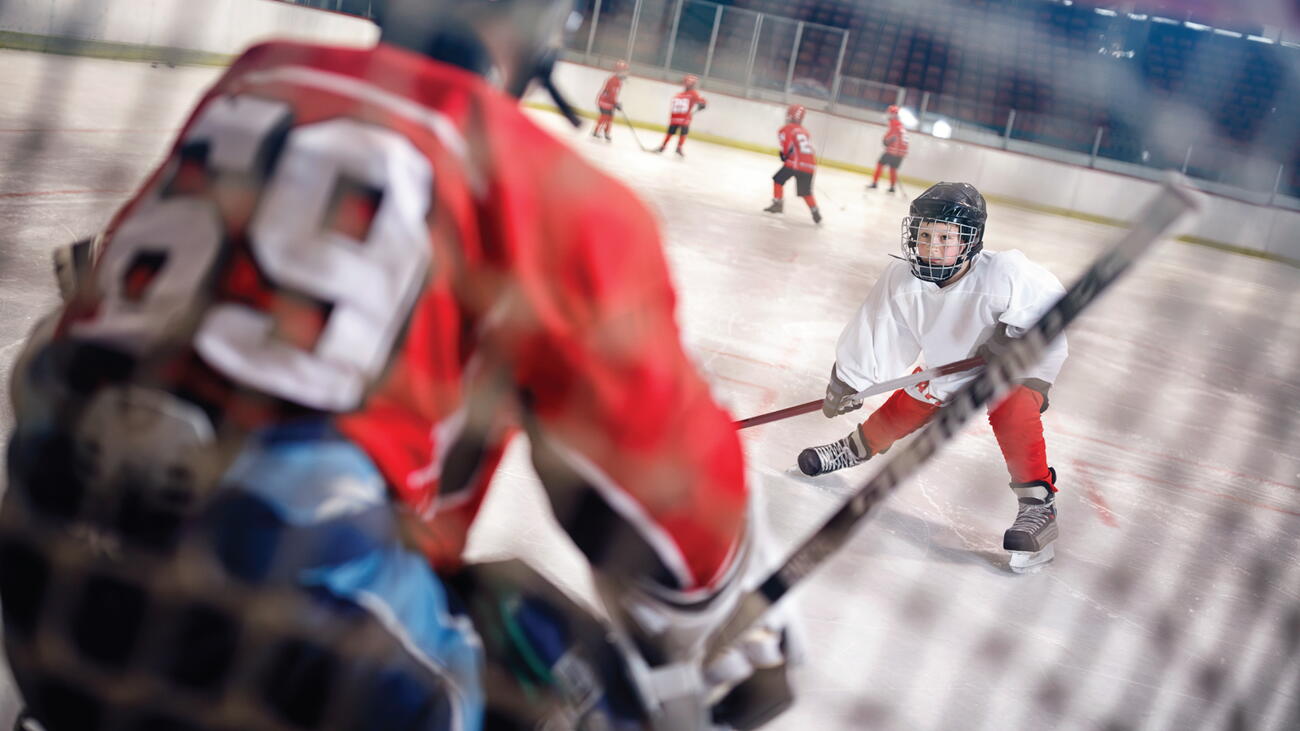
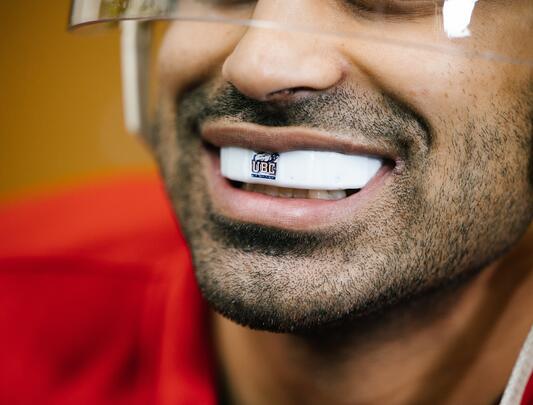
As young hockey players lace up for another season on the ice, Dr. Shelina Babul (BSc’91, PhD’01), clinical professor in the UBC Department of Pediatrics and director of the BC Injury Research and Prevention Unit, has some words of advice: wear your helmets and mouthguards—and don’t take your brain for granted.
A seasoned hockey mom herself and creator of the freely available Concussion Awareness Training Tool (CATT), Dr. Babul says it’s important for athletes, coaches, and parents alike to get familiar with the latest evidence-based protocols for preventing, recognizing, and managing this common brain injury.
“Your brain is a fragile organ, and it’s encased in a skull that’s only the thickness of three pennies,” she says. “You want to take care of it. It’s the only organ you can’t transplant.”
We asked Dr. Babul—the recipient of the Global Citizenship Award at alumni UBC's 2025 Alumni Achievement Awards—to debunk some common myths about concussion, and to share her tips for keeping kids’ heads in the game.
Myth 1: A concussion always results from a blow to the head.
A concussion can occur as a result of a blow to the head, but it can also happen when there is a force to other parts of the body that cause a whiplash motion of the head—such as in a body check or car crash, says Dr. Babul.
“Essentially, the mechanism of a concussion is the brain bouncing around inside your skull, which results in a shearing and tearing of the nerve fibres in the brain,” she adds. “That can be caused by any sudden, forceful movement.”
Myth 2: A concussion always involves loss of consciousness.
“Loss of consciousness occurs in only about 10 per cent of concussions,” says Dr. Babul. “But it is a red-flag symptom that signals an immediate need to seek emergency help, alongside others such as vomiting, seizures, numbness in the arms and legs, tingling of the fingers, and loss of vision or double vision.”
The most common symptom is headache. There can also be nausea, sensitivity to light and/or noise, confusion, mood changes, and sleep disturbances, among others. Dr. Babul stresses that concussion signs may show up several days after an incident, so it’s important to follow safety protocols.
“Sometimes at a hockey game, someone is pulled off after a hit, asked a few questions, and if they seem fine, they’re put back in the game. That’s not the right thing to do. It’s important to err on the side of caution—keep them off the rink and monitor their symptoms for a couple of days.”
Myth 3: Someone with a concussion should be kept awake.
Sleep plays an important role in helping the brain to heal from a concussion. “People used to be told to wake up a patient every two hours to make sure they’re okay, but that’s no longer the case,” notes Dr. Babul. “When you wake the patient up, you wake up the brain and prevent it from healing.”
After two days of rest, says Dr. Babul, patients should avoid oversleeping and start getting back to daily life, which can include light exercise on the advice of a doctor. “Follow the gradual return to activity protocols and as long as you’re not having new or worsening symptoms, you can continue progressing in your recovery. Research shows a little bit of exercise is actually good for recovery.”
Myth 4: Boys are more likely than girls to get severe concussions.
“Females appear to be more susceptible to a concussion. They tend to have more symptoms and take longer to recover,” says Dr. Babul, who explains that this may be due to the neck musculature in girls.
“It could be that the neck muscles are looser, so there’s a bigger whiplash or bobbling of the head,” she says, noting that her own daughter has experienced numerous concussions while playing competitive hockey.
Dr. Babul adds that no two concussions are alike.
“Everybody responds very differently, and we don’t yet know why that is the case. You can have virtually identical impacts, and one person will be completely fine while the other is out for months. We are still trying to understand this complex yet fragile organ called the brain.”
Myth 5: You can diagnose a concussion with a brain scan.
Concussions are an invisible injury that can’t be seen on the typical scanners used by emergency departments. “There’s no diagnostic criteria for concussion,” says Dr. Babul. “There is work being done on developing blood tests, but we’ve got a long way to go to really come up with a diagnostic tool.”
There are also no prescribed treatments that can help heal a concussion. “There’s no magic bottle of pills,” says Dr. Babul. “Immediate rest, followed by slowly introducing physical and cognitive activities back to daily life—that’s your best medicine.”